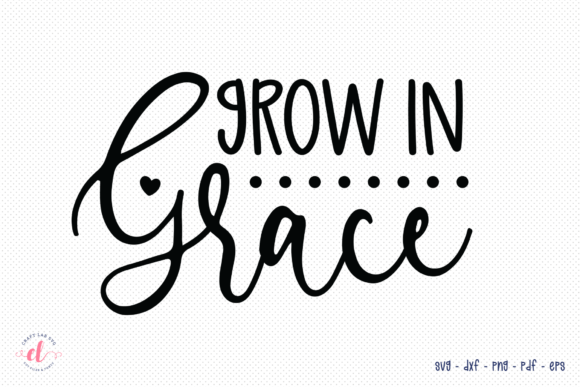
Grow in Grace SVG, DXF, PNG, EPS, PDF
A Designer’s First Look: Soft Faith, Clear Lines, Quiet Confidence
When I opened Grow in Grace SVG, DXF, PNG, EPS, PDF, I wasn’t scanning for clipart charm—I was asking: *Will this hold up under needle and thread?* Visually, it’s gentle but intentional: a centered quote with balanced spacing, clean curves, and a modest floral or script flourish (depending on the version). It doesn’t shout. It breathes. That makes it ideal for embroidery projects where sincerity matters more than spectacle—think baby onesies, linen tea towels, or minimalist sweatshirt cuffs. As a designer who’s stitched hundreds of faith-based pieces, I appreciate that this isn’t over-embellished. No tiny spirals, no overlapping flourishes that’ll vanish in satin stitch. What you see is what will translate.
How It Performs on Real Embroidery Projects
I tested Grow in Grace SVG, DXF, PNG, EPS, PDF across three real-world uses: a cotton tote bag for a church boutique, a lightweight unisex sweatshirt for a small shop launch, and a set of embroidered kitchen towels for holiday gifting. On the tote, it stitched cleanly at 4.5" wide—no puckering, even with medium-weight tear-away stabilizer. The lettering stayed legible, and the subtle curve in the word “Grace” held its shape without distortion. On the sweatshirt, I used a light cutaway backing and reduced stitch density slightly; the result felt substantial but not stiff—a win for custom apparel meant to be worn daily.
For the tea towels, I chose a simple running-stitch outline version (converted from the included vector files) and paired it with a single-tone fill. It read beautifully against natural linen—soft, handmade, unhurried. That’s the quiet strength of this design: it supports the product instead of competing with it. Whether you’re an Etsy seller listing personalized gifts or a craft business building a cohesive line of nursery decor, Grow in Grace SVG, DXF, PNG, EPS, PDF adds warmth without clutter.
Where to Use It Thoughtfully
This isn’t a one-size-fits-all embroidery file—and that’s a good thing. Its grace lies in its restraint, but that also means certain contexts need extra care:
- Small hoop sizes (under 3"): The full phrase won’t scale down well. Trim or simplify before stitching on baby caps or tiny patches.
- Stretchy or thin fabrics: Like lightweight knits or rayon blends—use cutaway stabilizer and test tension first. Lettering can blur if the fabric shifts mid-stitch.
- Dark or textured surfaces: On black t-shirts or burlap aprons, avoid light thread unless you’re adding underlay. A matte navy or charcoal thread reads richer and more grounded.
- Curved surfaces (caps, curved mugs): While the design works digitally for Cricut or Silhouette, true machine embroidery on curved caps requires digitizing adjustments—this file is a great starting point, but not plug-and-play for structured headwear without reworking.
- Frequent-wash items (baby clothes, towels): Stick to high-quality polyester thread and secure jump stitches. Avoid ultra-thin outlines—they’ll fray faster.
What It Adds to Your Handmade Product—and What It Doesn’t
Grow in Grace SVG, DXF, PNG, EPS, PDF elevates perceived value because it feels intentional—not generic, not rushed. Customers notice when a design has rhythm and breathing room. On a personalized gift, that translates to trust: they believe you chose something meaningful, not just available. For a boutique owner, it reinforces brand consistency—calm, kind, quality-focused. For an embroidery project aiming for giftability (like a baptismal pillow cover or wedding guest towel), it lands emotionally without being sentimental.
It won’t fix poor digitizing, weak stabilizing, or mismatched thread. And it won’t magically make dense fill stitches pop on fleece. But as a foundation? It’s reliable. As a digital embroidery file, it gives you flexibility—you can isolate elements for applique design, convert outlines for monogrammed borders, or layer it subtly behind a cross motif. That versatility matters for craft business owners juggling multiple product types.
Practical Notes Every Embroidery Designer Should Run Through
- Test on scrap fabric first—especially if using textured or dark material. See how thread colors interact before committing to your final piece.
- Check stitch density in your embroidery software. If it’s over 12,000 stitches for a 4" version, consider simplifying small details for better wearability.
- Confirm hoop size compatibility. Some versions may extend beyond standard 4x4 hoops—verify before hooping.
- Inspect corners and curves in zoom view. Are anchor points smooth? Will tight turns cause thread breaks?
- Try black-and-white mockups to assess contrast and readability—critical for printable mockups or Etsy listings.
- Compare light vs. dark fabric backgrounds visually. Some flourishes disappear on black unless reinforced.
- Use proper stabilizer—lightweight cutaway for knits, tear-away for stable wovens, fusible for linens.
- Verify licensing before selling finished products or bundling the digital embroidery file. Since it’s listed under Crafts and Graphics, confirm whether commercial use is permitted for your specific sales channel.
Final Thought: Not Just a Quote—A Quiet Anchor
As someone who’s turned dozens of faith-based phrases into stitched reality, I can say this: Grow in Grace SVG, DXF, PNG, EPS, PDF earns its place in a working designer’s library. It’s not flashy—but then, grace rarely is. It works on a toddler’s bib, a pastor’s apron, a teacher’s tote, or a grief-support pillow. It scales thoughtfully, digitizes cleanly, and carries weight without heaviness. For Etsy sellers building a story around intentionality, for small shop owners curating meaningful merchandise, and for makers who believe every stitch should reflect care—this is the kind of design that quietly becomes a staple. Just remember: let the fabric, the thread, and the purpose guide your choices—not just the file itself.