Chef in Training SVG, DXF, PNG, EPS, PDF
As a designer who’s digitized over 2,000 embroidery files and reviewed hundreds of commercial graphics for craft businesses, I opened Chef in Training SVG, DXF, PNG, EPS, PDF expecting charm—but what stood out immediately was its quiet confidence. It’s not loud or cartoonish; it’s warm, grounded, and just detailed enough to feel handmade without overwhelming the stitcher or the fabric. Think soft apron pockets, not oversized novelty tees.
Last week, I used it to embroider a set of linen tea towels for a local kitchen boutique—three sizes, two thread palettes (oatmeal + navy, sage + cream), and one very clear goal: make customers pause at the rack and think, “That’s *mine*.” The design delivered. Its balanced composition—chef silhouette slightly left-of-center, clean script quote curving beneath—gave breathing room for stitching clarity and fabric drape. No crowding. No visual fatigue.
Where This Design Earns Its Keep
Chef in Training SVG, DXF, PNG, EPS, PDF thrives where authenticity matters most: personalized gifts, small-batch apparel, and boutique merchandise. It’s ideal for:
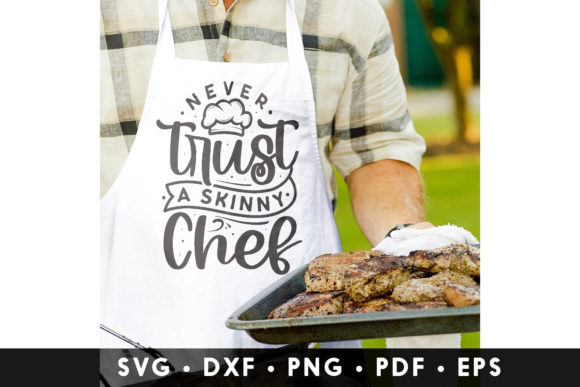
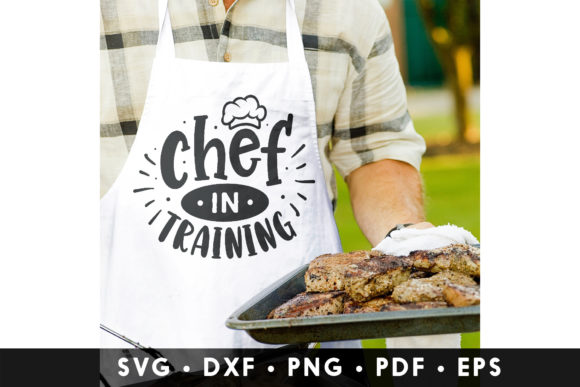
- Embroidered aprons and chef hats—especially on midweight cotton or twill, where satin stitch holds crisp lines and fill stitch reads cleanly
- Tote bags and sweatshirt fronts—its moderate width (roughly 3–4 inches wide in standard scaling) avoids distortion on curved seams or shoulder seams
- Baby onesies and nursery pillows—when resized thoughtfully, the rounded shapes and open letterforms avoid tiny, fragile stitches that snag or unravel
- Holiday or graduation gifts—its gentle encouragement (“Chef in Training”) lands with sincerity, not cliché, making it a strong choice for custom kitchen-themed presents
- Etsy listings and craft fair displays—paired with a simple printable mockup, it reads well on mobile and feels cohesive alongside hand-dyed fabrics or ceramic mugs
It’s also a smart asset for digital product sellers: the inclusion of EPS and PDF means easy vector scaling for logo integration or packaging design, while PNG and SVG support quick web previews and social media banners. As a Graphics product, it bridges physical and digital workflows—something many craft entrepreneurs overlook until they’re reformatting last-minute.
Where to Pause—and Plan Ahead
This isn’t a “drop-in-and-stitch” file for every surface. Real embroidery work demands respect for material limits—and Chef in Training SVG, DXF, PNG, EPS, PDF reveals its edges when pushed too far.
Avoid using it full-size on thin fabrics like lightweight rayon or baby knits without testing stabilizer layers first. Dense fill areas (like the chef’s hat brim or the base of the quote curve) can cause puckering if paired with insufficient cutaway or tear-away backing. On dark fabrics, check contrast early: some versions of the quote script may lose legibility if digitized with low-contrast thread colors—especially in smaller hoop sizes under 4x4 inches.
Curved surfaces—caps, beanies, or tapered pillow covers—require careful placement. The design’s horizontal flow works best on flat or gently contoured zones. Don’t force it onto a high-crown cap front unless you’ve tested hooping stability and stitch tension across the curve.
And yes—tiny details matter. If your version includes fine flourishes in the script (a subtle underline, a leaf motif, or delicate serif endings), inspect them closely at 100% zoom before sending to machine. What looks elegant on screen can vanish into a blur of running stitch or become unstable in dense satin stitch.
What It Says About Your Finished Product
When stitched well, Chef in Training SVG, DXF, PNG, EPS, PDF elevates perceived value—not through flash, but through intention. Customers notice the spacing. They feel the balance. A well-executed version on a heavyweight linen towel doesn’t say “craft project”—it says “thoughtful gift,” “small shop care,” “made for someone who loves to cook.” That quiet professionalism builds trust faster than any sales copy.
For Etsy sellers and handmade shop owners, this design supports brand consistency without demanding rigid uniformity. You can rotate thread colors seasonally (mustard + charcoal for fall, mint + ivory for spring), keep the same layout, and still reinforce recognition. It’s flexible enough for holiday embroidery bundles or wedding kitchen registries—yet distinctive enough to stand apart from generic foodie motifs.
Practical Designer Notes Before You Stitch
Before committing to client work or inventory production, do these five things:
- Test on scrap fabric—same weight, weave, and dye lot as your final piece. Watch how the quote curves behave on stretch vs. stable weaves.
- Check thread color contrast in both natural and artificial light. A navy-on-charcoal combo might look rich in daylight but muddy under kitchen lighting.
- Review stitch density visually in your embroidery software. Overly dense fills increase wear and washing risk—especially for baby embroidery or frequently laundered tea towels.
- Confirm hoop size compatibility. If your smallest hoop is 3x3”, scale down carefully—don’t sacrifice legibility for fit.
- Verify licensing for commercial use. Since this is listed as a Crafts product with broad application notes, confirm whether resale of finished embroidered items or digital resale of edited files is permitted.
Also: try a black-and-white mockup. Sometimes the strongest test of a design’s clarity is removing color entirely. Does the shape hold? Does the quote read instantly? With Chef in Training SVG, DXF, PNG, EPS, PDF, the answer is yes—when respected, not rushed.
At its best, this isn’t just another machine embroidery design. It’s a quiet collaborator—supporting your craftsmanship, honoring your customer’s story, and fitting seamlessly into real life: folded in a bakery gift box, stitched on a toddler’s first apron, or framed beside a hand-thrown mug. That’s the mark of thoughtful design assets. Not perfection. Not flash. Just resonance—stitched, sold, and shared with care.