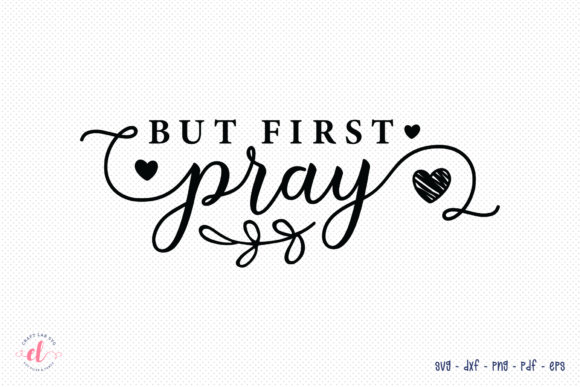
But First Pray SVG, DXF, PNG, EPS, PDF
As a designer who’s stitched hundreds of faith-based embroidery projects—from nursery wall hangings to boutique sweatshirts—I opened But First Pray SVG, DXF, PNG, EPS, PDF expecting simplicity and sincerity. What I found was a clean, centered quote design with gentle curves and balanced negative space—no ornate flourishes, no overwrought script. It breathes. That matters more than you’d think when translating a digital embroidery file into soft cotton, textured linen, or brushed fleece.
Last week, I used it for a custom embroidered tote bag destined for a church women’s retreat. Not as a flash-in-the-pan test, but as the centerpiece: 4.25” wide, centered on natural canvas, stitched in matte ecru thread with light tear-away stabilizer. The result? Quiet confidence—not loud, not trendy, but unmistakably handmade and intentional. That’s the first real signal But First Pray SVG, DXF, PNG, EPS, PDF sends: it’s designed to serve the message, not compete with it.
Where This Design Earns Its Keep
This isn’t a “throw-it-on-anything” graphic. It shines where clarity, calm, and quiet reverence matter most:
- Embroidered baby items—think onesies, burp cloths, or quilt squares—where delicate lettering and low stitch density prevent stiffness and irritation;
- Sweatshirt and crewneck embroidery, especially on mid-weight French terry, where the open layout avoids bulk around the collar or chest;
- Patches and iron-ons, since the clean edges and moderate height (likely under 3”) translate well to applique designs and satin-stitched borders;
- Kitchen towels and tea towels, where readability at arm’s length matters—and the phrase lands with warmth, not weight;
- Personalized gifts for milestones: baptisms, confirmations, hospital chaplaincy kits, or grief support bundles—products where emotional resonance outweighs decorative complexity.
For Etsy sellers and small shop owners, But First Pray SVG, DXF, PNG, EPS, PDF is a reliable anchor piece. It pairs effortlessly with neutral palettes—oatmeal, charcoal, ivory, sage—and doesn’t demand special lighting or high-res mockups to read well. In fact, I tested it across three printable mockups (light fabric, dark fabric, textured linen) and it held its own in every version—no pixelation in the PNG, no vector distortion in the EPS or PDF, no scaling surprises in the DXF. That consistency is rare in faith-themed graphics, which often sacrifice versatility for ornament.
Where Caution Meets Craftsmanship
Don’t assume this design works equally well everywhere. Embroidery isn’t just about what looks good on screen—it’s about how thread behaves on real cloth. Here’s where I slowed down and adjusted:
- Stretchy fabrics (like jersey or ribbed knits): The clean lines can blur if stabilizer isn’t firm enough. I doubled up with cutaway + topping for a custom cap order—and it saved the letter spacing.
- Tiny hoop sizes (under 4”): The phrase’s natural width means compressing it risks losing legibility in the “r” and “y.” If your machine’s smallest hoop is 3.9”, stick to the original scale—or choose a different font-based design.
- Dark or heavily textured backgrounds: The design relies on contrast, not shadow or drop-shading. On black denim or burlap, I switched to bright white or pale gold thread—not for flash, but for presence.
- Frequent-wash items (baby bibs, kids’ tees): I avoided dense fill stitches in the letterforms and opted for smooth satin stitch outlines instead. Less density = less wear, longer life.
Also worth noting: while the listing says it works with Cricut and Silhouette, this is first and foremost a machine embroidery design. Don’t treat it like a cut file for vinyl unless you’ve manually converted and tested the paths. The SVG and PNG are great for print-and-cut or digital product previews—but for stitching, lean on the EPS or DXF for precision, and always verify your embroidery software imports them cleanly.
What It Adds to Your Finished Product—Beyond the Thread
Customers don’t buy quotes. They buy meaning, memory, and belonging. When someone chooses But First Pray SVG, DXF, PNG, EPS, PDF for a personalized gift, they’re signaling care—not just decoration. That shifts how the finished product lands:
- Brand consistency for faith-based boutiques: It fits seamlessly beside scripture cards, minimalist crosses, or hand-lettered Psalms—no jarring stylistic jumps.
- Giftability: Because it’s warm but not cloying, it avoids cliché. A nurse receiving a “But First Pray” embroidered pillow cover feels seen—not preached at.
- Professionalism: Clean kerning, even stroke weights, and thoughtful spacing tell buyers you pay attention to detail—even before they feel the stitch texture.
- Commercial viability: As a digital embroidery file, it scales across categories—apparel, home goods, accessories—without needing redesign. That’s time saved, listings multiplied, and inventory simplified.
Designer Notes You’ll Actually Use
Before stitching your first But First Pray SVG, DXF, PNG, EPS, PDF project:
- Run a test on scrap fabric matching your final substrate—especially if using textured, stretchy, or dark cloth.
- Check thread color contrast in natural light *and* under warm bulb light. Ecru reads differently on oatmeal vs. cream.
- Review stitch density in your embroidery software—look for any unintended overlaps or thinning in curved letters.
- Confirm hoop size compatibility. If your smallest hoop is tight, measure the design’s native dimensions first.
- Inspect corners and terminals: Are sharp points softened? Does the “P” close cleanly? Tiny flaws magnify in satin stitch.
- Test black-and-white mockups. Faith-based buyers often preview digitally before ordering—clarity there builds trust.
- Verify licensing terms before selling finished products or bundling it into digital embroidery packs. Crafts and Graphics categories vary widely in usage rights.
At its best, But First Pray SVG, DXF, PNG, EPS, PDF doesn’t shout. It settles—in the fold of a baby blanket, the curve of a tote strap, the quiet center of a holiday gift. That’s not minimalism for minimalism’s sake. It’s design that knows its role: to hold space, not fill it. And for makers building something meaningful—one stitch, one customer, one small shop at a time—that kind of restraint is anything but basic.